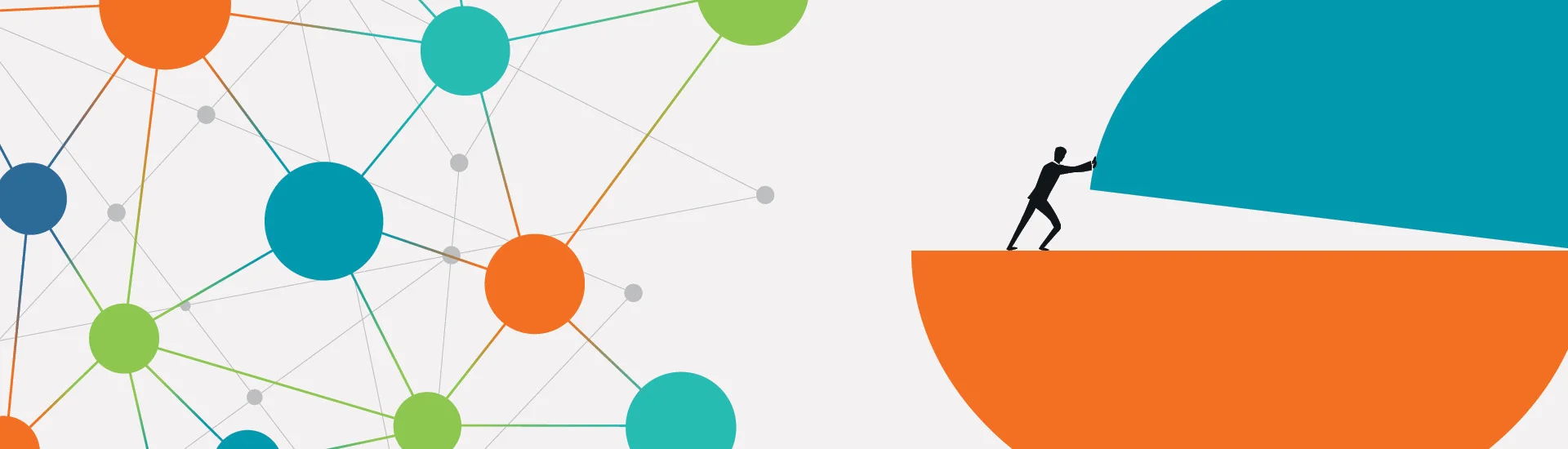
We have never had more ways to connect at work: platforms, dashboards, agents, collaboration tools, AI assistants, automations and more notifications than anyone can stand. In theory, this infrastructure should make organizations feel clearer, closer and more aligned. But inside many companies, the opposite is happening.
People are more productive on paper, but not always more effective; more reachable, but not always more understood; more visible, but not always more valued; more plugged into systems, but not always connected to the purpose or people around them.
These contradictions reveal a blind spot: many organizations confuse being connected with having connection.
Connected is infrastructural: access, speed, technology, systems, work processes and communication flow. Connection is human: trust, shared meaning, common beliefs, belonging and the feeling that we are part of something together. Too many organizations have overbuilt the first while underinvesting in the second. Or worse, make an assumption that investment in the first will take care of the second.
The outcome: while we are constantly “connected,” we feel more disconnected than ever.
The hidden cost of disconnection
When employees do not feel connected to the company they work for – to its people, its purpose, its vision or its culture – it shows up in how the business operates and ultimately performs.
This is where culture, typically seen as a people issue, clearly becomes a business issue. Culture is how connection is built and sustained. It is the lived experience of the organization: the shared beliefs, behaviors, rituals, decisions and everyday moments that tell people what matters here, what is expected here, and what we are building together.
When that connection is weak, the cost is real. Disconnection slows decisions, creates inconsistency, weakens trust, fuels burnout, and affects turnover and your reputation as a good place to work. While employees can be technically engaged in the work, they can be emotionally detached from the organization.
From the outside, an organization may look highly “connected” because it touts the latest tools, channels and technologies, but it’s leadership behavior and employee trust that shape whether people feel connected to the company, its culture and one another.
People may be asking:
- Do I feel part of this place, or just accountable to its tasks?
- Do our values show up when decisions get hard?
- Do I trust leaders to tell the truth and act on it?
- Does my work matter beyond my output?
- Are we actually moving together, or just moving fast?
When those questions go unanswered, people start to drift.
Culture drift happens gradually
Culture drift happens in the gap between what an organization says it believes and what people experience every day. It happens when leaders assume the intended culture is being felt because messages are being sent, when values are known but not practiced, or when teams are productive but not meaningfully aligned. Culture drift can also accelerate when an organization grows, acquires, restructures, automates or moves faster than its culture can adapt.
The instinct is often to solve that drift with more communication or initiatives – another town hall, another survey, another leadership message, another senior leadership training, and so on. Some may be necessary, but they are not enough. The problem is not always that people need more information or training. Often, they need more meaning.
No communication plan or committee can solve for a culture that people do not actually experience. The connection that arises from strong cultures has to be designed, practiced, reinforced and led.
AI makes this more urgent, not less
AI can help organizations move faster, analyze data, summarize information, generate content, and remove friction. But AI cannot build culture or connection. It cannot make people trust each other, feel seen, or believe they belong. It cannot decide what an organization believes. And it cannot replace the human moments where culture is actually made: how leaders show up, how teams make decisions, how people are recognized, how conflict is handled, and how meaning is made real.
As technology changes the way we work, the human experience of work matters more. AI may make organizations more connected at an infrastructure level, but connection still requires people. Culture is where that human advantage lives.
How Leaders Build Culture
The leaders who understand this will ask different questions. Not just, “Are we communicating enough?” but, “Where are people feeling disconnected from our purpose, our leadership, our teams, or our future?” Not just, “Are people using the tools?” but, “Are those tools helping people build trust, clarity and shared understanding, or are they creating more noise?” Not just, “Are we moving fast enough?” but, “Are we building the kind of culture that allows people to move fast without becoming fragmented?”
For leaders under pressure to deliver results, culture can feel like a long-term investment competing with short-term demands. But that is the wrong frame. Culture creates the conditions for connection, and connection creates the speed, trust, clarity, resilience and commitment leaders need right now. That is business value.
Organizational cultures do not come apart simply because people lack access to information. They come apart when people lose connection to what makes the work meaningful. And they come back together when culture gives them something shared to believe in, belong to, and build from.
Is connection lacking in your organization? Does your culture need strengthening?
